Human Authority, AI Intelligence: The Future of Acquisition Decision Support

Artificial intelligence is rapidly expanding what is possible within federal acquisition. However, the most effective application of AI is not to remove the Contracting Officer from the decision process. It is to provide the Contracting Officer with faster access to relevant information, stronger analytical capabilities, and better visibility into the factors that support a decision.
Within nGAP Inc.’s Open Acquisition System (OAS) and Savantir, this approach can be implemented through Human-in-the-Loop AI decision support: technology performs the data-intensive work of collecting, structuring, comparing, and analyzing acquisition information while authorized acquisition professionals retain responsibility for judgment, approval, and action.
AI Supports the Decision. The Contracting Officer Makes It.
Federal contracting decisions frequently require more than identifying the lowest price or confirming that a required document exists. Contracting Officers must consider regulatory requirements, funding availability, acquisition history, competition, pricing, performance risk, contractual terms, and the specific circumstances surrounding an acquisition.
These decisions require professional judgment.
Human-in-the-Loop AI preserves that judgment while improving the information available to the decision-maker. Instead of allowing an algorithm to independently determine an acquisition outcome, AI can identify relevant information, detect inconsistencies, highlight risk, compare historical data, and present recommendations for review.
The distinction is important: AI provides decision intelligence; the Contracting Officer retains decision authority.
How OAS and Savantir Enable Human-in-the-Loop Decision Support
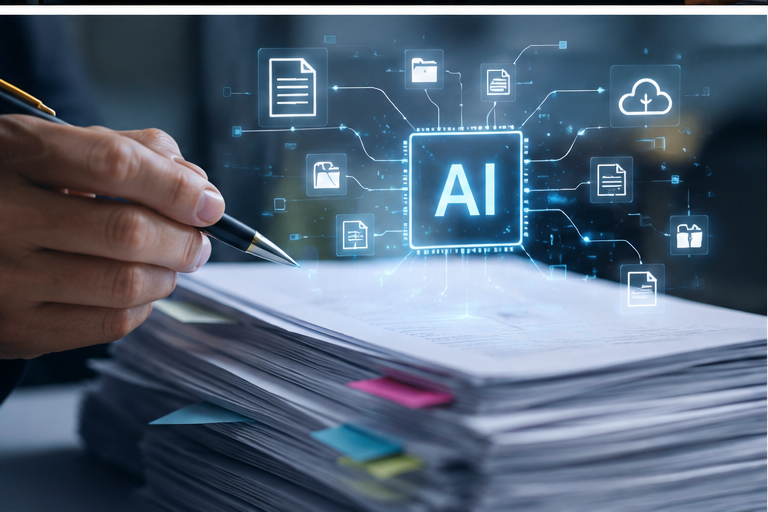
OAS provides the operational framework for managing acquisition activities across the contract lifecycle. The platform can connect requirements, funding, solicitations, awards, modifications, performance information, and financial activity within a traceable acquisition environment. nGAP has designed OAS around real-time visibility, structured workflows, and auditable acquisition data.
Savantir extends that environment by transforming large volumes of unstructured information into structured, actionable data. Documents such as solicitations, statements of work, proposals, invoices, modification packages, and other acquisition records can contain critical information that would otherwise require extensive manual review. Savantir is designed to extract and consolidate that information so it can be analyzed alongside structured OAS data. Together, these capabilities create a practical HITL workflow
Data → Analysis → Recommendation → Human Review → Decision → Audit Record
For example, before a Contracting Officer approves an action, Savantir could surface unusual pricing, identify a potential clause or documentation gap, compare the action against historical acquisition data, or identify a funding inconsistency. OAS can then present that information within the acquisition workflow where the responsible official can review the underlying evidence and determine the appropriate action.
The system accelerates analysis without transferring decision authority away from the acquisition professional.
Turning Acquisition Data Into Decision Intelligence
The effectiveness of AI depends heavily on the information available to it. Fragmented acquisition environments can leave important information distributed across documents, databases, spreadsheets, financial systems, and disconnected workflows.
OAS and Savantir address this problem from complementary directions. OAS structures acquisition activity and maintains lifecycle visibility, while Savantir extracts and analyzes information that may otherwise remain locked inside documents or disparate data sources. nGAP has also described Savantir capabilities involving predictive analytics, anomaly detection, historical comparisons, cost estimation, and automated decision support.
For a Contracting Officer, this can translate into faster answers to important questions:
Does the proposed action contain unusual pricing or cost patterns?
Are required acquisition elements missing or inconsistent?
How does the proposed price compare with relevant historical information?
Are funding, scope, schedule, and contractual requirements aligned?
Are there anomalies that warrant additional human review?
What documents, prior actions, or data points support the recommendation?
Instead of manually searching through numerous records before reaching a conclusion, the Contracting Officer can begin with a consolidated analytical picture and then investigate the underlying evidence where professional judgment is required.
Explainability and Auditability
Decision support in government acquisition must do more than produce an answer. The reasoning and information supporting a consequential recommendation should be reviewable.
A well-designed decision-support process can preserve the relationship between the source data, AI-generated analysis, human review, resulting decision, and subsequent acquisition action.
That creates an important distinction between opaque automation and accountable decision support. The objective is not simply to know what the technology recommended, but to provide acquisition professionals with sufficient information to understand why an issue was surfaced and determine whether the recommendation is appropriate.
Managing Exceptions Instead of Searching for Them

One of the greatest opportunities for AI in acquisition is shifting professional attention away from routine information gathering and toward exceptions that genuinely require expertise.
Rather than requiring Contracting Officers to manually inspect every available data point with equal intensity, Savantir can help identify anomalies, trends, inconsistencies, and emerging risks. OAS can place those findings within the appropriate workflow and contractual context. nGAP has described this combination as providing proactive alerts for issues such as unusual pricing, clause gaps, obligation mismatches, and operational risks.
The result is management by exception.
Routine information can be processed and organized automatically. Higher-risk conditions receive greater visibility. The Contracting Officer can then concentrate expertise where judgment provides the greatest value.
Preserving Human Authority While Increasing Acquisition Speed
AI does not need independent contracting authority to significantly improve acquisition performance. Its value lies in compressing the time between information, understanding, and action. OAS provides the acquisition workflow and system-level visibility. Savantir transforms underlying information into usable intelligence. Human-in-the-Loop controls ensure that consequential decisions remain subject to appropriate professional review.
This model provides a practical path toward responsible AI-enabled acquisition.
Automate the analysis. Surface the evidence. Identify the risk. Support the recommendation. Preserve the human decision.

For nGAP Inc., Human-in-the-Loop AI represents more than an AI safeguard. It is an operating model for modern acquisition—one in which OAS and Savantir give Contracting Officers the speed and analytical power of artificial intelligence while preserving the accountability, judgment, and authority required of the acquisition professional.